"Human activities, particularly international trade,
promote the spread of invasive species that cause
extensive economic losses and negatively affect native
species."
"The harlequin ladybird Harmonia axyridis, introduced
for biological pest control, has become an invader that
is outcompeting indigenous ladybird species in many
countries."
 | ||
| Harmonia axyridis - the invasive harlequin ladybird. |
In my May 7th post, I discussed a study that revealed an interesting mutualistic relationship between termites and fungi that resulted in the discovery of new compounds, the tyroscherins, that showed some potential use as new antifungals. Then, in my May 22nd post, we acknowledged that our bodies are, among other things, giant growth vessels for trillions of microbial cohabitants, referred to collectively as the human microbiota. All of these worlds collide in a recent publication in the journal Science, where Andreas Vilcinskas and co-workers have uncovered a microbe at the crux of an ongoing war that spans multiple continents, is having negative socioeconomic impacts, and could possibly even explain the sometimes funky terroir of wine. The combatants? Ladybugs. Specifically, the invasive central Asian species Harmonia axyridis, AKA the harlequin ladybird, is wreaking havoc on the native European and American ladybug populations. The study revealed that harlequin ladybirds carry a pathogenic fungal microsporidian closely related to Nosema thompsoni that is functioning as a biological WMD against Coccinella septempunctata, the indigenous ladybird species. This study reveals yet again that biology we see unfolding at the macroscale (i.e. one ladybug kills another) has, at its core, a microscale explanation.
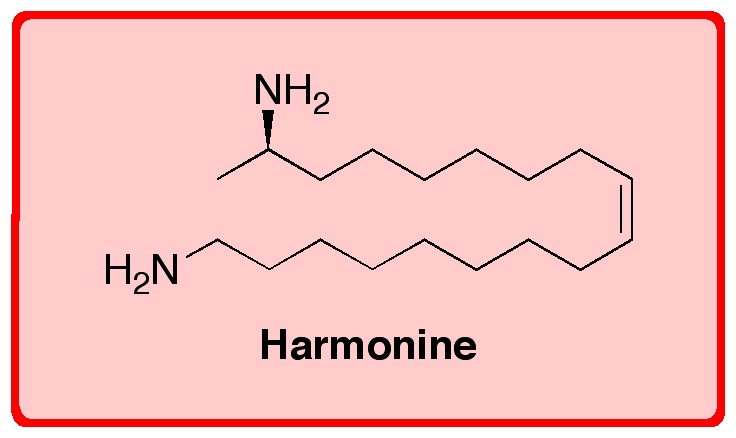 Prior to this study, it was thought that the lethality of the harlequin ladybird towards Coccinella was derived from the exceptionally high levels of harmonine - a foul tasting, stinky, antibacterial, antiparasitic, wine-spoiling alkaloid - in harlequin ladybird hemolymph (ladybug blood). This study unequivocally showed that this was, in fact, not the case. Indeed, you could shoot up Coccinella with high concentrations of harmonine, and they'd survive just fine. However, after identifying the Nosema parasite using microscopy and nucleic acid analysis, the group was able to purify the pathogen from harlequin hemolymph and show that they were the causative agent of sickness and death in the Coccinella victims. This exposes an entirely new set of questions regarding the biological relationships seen here, and there are several:
 - Nosema kills Coccinella septempunctata (a parasitic relationship).
- Nosema requires a host, Harmonia axyridis, to survive.
- Nosema is not parasitic to Harmonia axyridis.
- Harmonia axyridis uses Nosema to conquer new territory.
On its face, the paper clearly establishes point #1, as was discussed above. This raises very interesteing, and perhaps more important, things to consider with respect to points 2-4, and harmonine may be controlling - at least in part - the entire situation. Harmonine is a known antimicrobial, and it is found in high concentrations in the hemolymph of the harlequin ladybird, but is not present in the hemolymph of the defenseless Coccinella. It was found in this report that the microsporidia, while living in the harlequin ladybird, were essentially deadbeats - metabolically inactive, non-disease causing cells - that were apparently just along for the ride. The authors proposed the possibility that the high concentration of harmonine keeps these potential pathogens in check, but were careful to point out that Harmonia axyridis also produces unusually high levels of antimicorbial peptides. So, to really get to the bottom of Nosema immunity in harlequin ladybirds, more studies will need to be conducted. Nevertheless, the Harmonia beetles must be employing a system to harbor and control their microsporidian WMDs (points 2 & 3) until they are ready to deliver the deadly payload (point 4) on unsuspecting Coccinella. The authors think that this system may be a glimpse at a common evolutionary mechanism of successful invasive species: if you amp up your immune system (with compounds like harmonine and antimicrobial peptides), you will be able to resist the new and strange pathogens you are bound to encounter in your new territory, while simultaneously introducing a deadly dose of pathogen to your soon-to-be conquered lands. In a fascinating perspective piece that served as a lead-in to this article, Stuart Reynolds compares the Harmonia-Coccinella-Nosema relationship to the European-Native American-smallpox scenario that played out horrifically in the 16th century conquest of the Americas. It may not be a pretty comparison, but it doesn't make it less biologically pertinent.
 |
| An aphid - food for Harmonia |
 In a Science and Tech highlight of this article in Chemical and Engineering News, another interesting layer of this story was introduced. You see, the harlequin ladybird didn't diabolically opt to conquer Europe and the US. We brought it here on purpose. It turns out that Harmonia have a voracious appetite for aphids, tiny little insect pests that are notorious for eating, regurgitating on, transmitting diseases to, and otherwise raining hell upon important agricultural crops. The harlequin ladybird will happily feast upon 100s of the insects a day, far more than the native Coccinella, making them an attractive, all-natural, non-chemical, "pesticide". (What could possibly go wrong!? Fast-forward to today...) Since the Harmonia beetles are now taking over, is there a way to get the population back under control? The secret may lie in the aphid itself - specifically the aphid gut, where a bacterial symbiont, Staphylococcus sciuri, lives and produces a chemical attractant for the ladybugs, one of which is called farnesene. The ladybugs smell the farnesene, locate the aphids, and then chow down. So now that the Harmonia population is out of control, folks are throwing around the idea of using farnesene as bait in ladybug traps! Why not... what could possibly go wrong...!?
Herein lies a great and complex system of multispecies symbioses. Nosema is willing to live in the chemically hostile, harmonine laced blood of Harmonia axyridis until they can find a Coccinella septempunctata to infect. Once the Coccinella die at the hands of Nosema, the harlequins can take over new turf. Once they do that, they need something to eat, so they follow their noses - via a farnesene signal - to a tasty meal of aphids. And here is the craziest symbiosis yet. The symbiont (Staphylococcus sciuri) of the prey (the aphid) attracts the predator (Harmonia). Essentially, "Hey, come eat my host!" Like most complex host/microbe relationships, I wouldn't be surprised if there's more here - chemically - than meets the eye. At any rate, these stories have exposed yet another example of macroscopic biology depending on microscopic biology, which ultimately relies on unique and specialized chemistry. Am I a biased chemist talking here? Probably, but it's still cool, isn't it?
- @EJDimise


