Thursday, May 30, 2013

Biological Weapons in the Ladybug Wars

"Human activities, particularly international trade,
promote the spread of invasive species that cause
extensive economic losses and negatively affect native
species."

"The harlequin ladybird Harmonia axyridis, introduced
for biological pest control, has become an invader that
is outcompeting indigenous ladybird species in many
countries."


Harmonia axyridis - the invasive harlequin ladybird.

    In my May 7th post, I discussed a study that revealed an interesting mutualistic relationship between termites and fungi that resulted in the discovery of new compounds, the tyroscherins, that showed some potential use as new antifungals.  Then, in my May 22nd post, we acknowledged that our bodies are, among other things, giant growth vessels for trillions of microbial cohabitants, referred to collectively as the human microbiota.  All of these worlds collide in a recent publication in the journal Science, where Andreas Vilcinskas and co-workers have uncovered a microbe at the crux of an ongoing war that spans multiple continents, is having negative socioeconomic impacts, and could possibly even explain the sometimes funky terroir of wine.  The combatants?  Ladybugs.  Specifically, the invasive central Asian species Harmonia axyridis, AKA the harlequin ladybird, is wreaking havoc on the native European and American ladybug populations.  The study revealed that harlequin ladybirds carry a pathogenic fungal microsporidian closely related to Nosema thompsoni that is functioning as a biological WMD against Coccinella septempunctata, the indigenous ladybird species.  This study reveals yet again that biology we see unfolding at the macroscale (i.e. one ladybug kills another) has, at its core, a microscale explanation. 
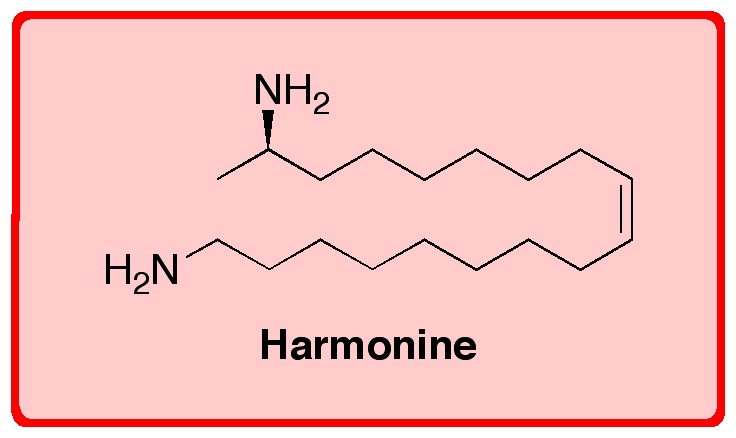
    Prior to this study, it was thought that the lethality of the harlequin ladybird towards Coccinella was derived from the exceptionally high levels of harmonine - a foul tasting, stinky, antibacterial, antiparasitic, wine-spoiling alkaloid - in harlequin ladybird hemolymph (ladybug blood).  This study unequivocally showed that this was, in fact, not the case.  Indeed, you could shoot up Coccinella with high concentrations of harmonine, and they'd survive just fine.  However, after identifying the Nosema parasite using microscopy and nucleic acid analysis, the group was able to purify the pathogen from harlequin hemolymph and show that they were the causative agent of sickness and death in the Coccinella victims.  This exposes an entirely new set of questions regarding the biological relationships seen here, and there are several:
  1. Nosema kills Coccinella septempunctata (a parasitic relationship).
  2. Nosema requires a host, Harmonia axyridis, to survive. 
  3. Nosema is not parasitic to Harmonia axyridis.
  4. Harmonia axyridis uses Nosema to conquer new territory.
On its face, the paper clearly establishes point #1, as was discussed above.  This raises very interesteing, and perhaps more important, things to consider with respect to points 2-4, and harmonine may be controlling - at least in part - the entire situation.  Harmonine is a known antimicrobial, and it is found in high concentrations in the hemolymph of the harlequin ladybird, but is not present in the hemolymph of the defenseless Coccinella.  It was found in this report that the microsporidia, while living in the harlequin ladybird, were essentially deadbeats - metabolically inactive, non-disease causing cells - that were apparently just along for the ride.  The authors proposed the possibility that the high concentration of harmonine keeps these potential pathogens in check, but were careful to point out that Harmonia axyridis also produces unusually high levels of antimicorbial peptides.  So, to really get to the bottom of Nosema immunity in harlequin ladybirds, more studies will need to be conducted.  Nevertheless, the Harmonia beetles must be employing a system to harbor and control their microsporidian WMDs (points 2 & 3) until they are ready to deliver the deadly payload (point 4) on unsuspecting Coccinella.  The authors think that this system may be a glimpse at a common evolutionary mechanism of successful invasive species: if you amp up your immune system (with compounds like harmonine and antimicrobial peptides), you will be able to resist the new and strange pathogens you are bound to encounter in your new territory, while simultaneously introducing a deadly dose of pathogen to your soon-to-be conquered lands.  In a fascinating perspective piece that served as a lead-in to this article, Stuart Reynolds compares the Harmonia-Coccinella-Nosema relationship to the European-Native American-smallpox scenario that played out horrifically in the 16th century conquest of the Americas.  It may not be a pretty comparison, but it doesn't make it less biologically pertinent. 

An aphid - food for Harmonia
    In a Science and Tech highlight of this article in Chemical and Engineering News, another interesting layer of this story was introduced.  You see, the harlequin ladybird didn't diabolically opt to conquer Europe and the US.  We brought it here on purpose.  It turns out that Harmonia have a voracious appetite for aphids, tiny little insect pests that are notorious for eating, regurgitating on, transmitting diseases to, and otherwise raining hell upon important agricultural crops.  The harlequin ladybird will happily feast upon 100s of the insects a day, far more than the native Coccinella, making them an attractive, all-natural, non-chemical, "pesticide".  (What could possibly go wrong!?  Fast-forward to today...)  Since the Harmonia beetles are now taking over, is there a way to get the population back under control?  The secret may lie in the aphid itself - specifically the aphid gut, where a bacterial symbiont, Staphylococcus sciuri, lives and produces a chemical attractant for the ladybugs, one of which is called farnesene.  The ladybugs smell the farnesene, locate the aphids, and then chow down.  So now that the Harmonia population is out of control, folks are throwing around the idea of using farnesene as bait in ladybug traps!  Why not... what could possibly go wrong...!?
 
    Herein lies a great and complex system of multispecies symbioses.  Nosema is willing to live in the chemically hostile, harmonine laced blood of Harmonia axyridis until they can find a Coccinella septempunctata to infect.  Once the Coccinella die at the hands of Nosema, the harlequins can take over new turf.  Once they do that, they need something to eat, so they follow their noses - via a farnesene signal - to a tasty meal of aphids.  And here is the craziest symbiosis yet.  The symbiont (Staphylococcus sciuri) of the prey (the aphid) attracts the predator (Harmonia).  Essentially, "Hey, come eat my host!"  Like most complex host/microbe relationships, I wouldn't be surprised if there's more here - chemically - than meets the eye.  At any rate, these stories have exposed yet another example of macroscopic biology depending on microscopic biology, which ultimately relies on unique and specialized chemistry.  Am I a biased chemist talking here?  Probably, but it's still cool, isn't it?

- @EJDimise
 

Tuesday, May 28, 2013

When Politics and Science Collide - The Ongoing Drama at NSF

- Rep. Eddie B. Johnson (D-TX) to Rep. Lamar Smith (R-TX)
Ranking members of the Committee of Science, Space & Technology


    In my May 5 post, I discussed legislation that is currently being considered by the House of Representative's Committee on Science, Space, and Technology that would fundamentally change the way National Science Foundation (NSF) grants would be approved.  The legislation, sponsored by the chairman of the committee, Rep. Lamar Smith (R-TX), would place unprecedented requirements and restrictions on the kinds of research that could be funded by NSF and would add an additional layer of government imposed review in the granting process.  In the same post, I noted how the rule changes would directly clash with the historical vision of the NSF as laid out be Vannevar Bush in the 1940s.  Last month, a discussion draft of the bill, referred to as the "High Quality Research Act" was posted on the web.  Several of the main points highlighted in the draft have resulted in an intense backlash from the scientific community and Democratic legislators (try typing "NSF Lamar Smith" into Google or just follow the link from the quotation at the top of this post).  

    The High Quality Research Act would require the NSF director to certify the following 3 things with regard to any research grant (under Sec.2(a)):
  1. it is in the interest of the US regarding, "national health, prosperity, or welfare, and to secure the national defense"
  2. it is of high quality and, "answers questions or solves problems that are of the utmost importance to society at large" 
  3. it does not duplicate research that is already being funded by any Federal agency     
It's safe to say that the brunt of the controversy stems from point number 1 and the overarching idea that the NSF director will have the depth and breadth of knowledge to certify that all NSF grants meet these criteria.  Point 3 is arguably quite reasonable from the perspective of the legislator, though the current grant review process already tries to address this issue.  Point 2 seems obvious and sounds like the general fluff that precedes most funding announcements.  (Do researchers generally try to address things that are unimportant?)  Perhaps the most foreboding part of the entire 3 page draft was to be found in Sec.2.(e), titled "Implementation By Other Agencies", with the directive that within the first year of implementation of the proposed legislation, "the Director of the Office of Science and Technology Policy, in collaboration with the National Science and Technology Council, shall report... on how the requirements of subsection (a) may be implemented in other Federal science agencies."  So, the legislation would not only add new particulars regarding the motivations for proposed research (does it promote "the interest of the US"?), to be endorsed individually by the head of the NSF, but would seek to extend the new regulations to other scientific funding bodies (e.g NIH, NASA, etc...).

    On the surface, the language may appear more ore less benevolent.  The economic times are hard.  Across government, there is a push to find savings and eliminate "waste, fraud, and abuse".  However, on April 17, the day before the discussion draft of the act was released to the internet, the House Committee on Science, Space, and Technology held a hearing with the acting NSF Director Cora Marrett, the chair of the National Science Board Dan Arvizu, and presidential science advisor John Holdren regarding President Obama's FY 2014 NSF budget request.  Here, the tone from Republicans on the committee reflected how the seemingly straight forward content of this legislation forebodes an unwelcome injection of politics into the process of funding basic scientific research.  With the backdrop of new limits placed on NSF in a spending bill in March, the result of efforts by Sen. Tom Coburn (R-OK) regarding the funding of political science research, which is now limited - by law - to research that promotes the, "national security or the economic interests of the United States", the committee members proceeded to extend similarly narrow logic to any and all NSF grants.  In doing so, they employed the time honored tradition of picking out individual grants with names they thought sounded funny and asking the panel members to please justify why the grants were funded.  A particularly good exchange between John Holdren and committee member Rep. Bill Posey (R-FL) can be viewed via the link embedded in the Holdren quote below:   


should support." - John Holdren, co-chair of
the President's Council of Advisors on Science 
and Technology (PCAST) 


This distills the essence of what makes the current situation so contentious within the scientific community.  Where do lines get drawn?  What research is "worth" funding?  Who gets to decide if a particular project (or discipline) is "in the interest of the US"?  Legislation like the Coburn amendment and the High Quality Research Act set dangerous precedents, allowing political motivations and short-term goals to limit, guide, or restrict the direction of basic research. 

    In more recent developments, acting NSF director Cora Marrett denied a written request from Rep. Smith to make available the, "scientific/technical reviews and the Program Officers Review Analysis" for five grants that were "of interest" and about which he had "concerns".  Rep. Smith was thus seeking the independent reviewer comments and analysis from five NSF grant proposals that he and other committee members, for one reason or another, found questionable.  Director Marrett denied the request based on privacy/confidentiality issues, maintaining that the reviews themselves, in addition to the names of the reviewers, must remain private to fully protect the reviewers and the review process, which she explained in her response to Rep. Smith.  The ScienceInsider blog has posted an inteview with a committee aid regarding the requested information for the five grants.  The aid made clear that the committee didn't want the names of the reviewers, just the content of the reviews themselves.  Additionally, the interview lays bare the fact that the committee had been considering the implementation of an "additional layer of accountability" that would occur as a "next step after" peer review.  The aid was vague on who and what would constitute this "additional layer".  

    If I understand the political zeitgeist, it is that (1) everyone dislikes "big governement" in their own special way, (2) everyone is for government accountability in their own special way, and (3) people like that the US is a bastion of high quality, cutting edge research.  Peer review - the process of "self-policing" of science by scientists - for grants, publications, etc... is a foundational aspect of the scientific enterprise in the US.  Is it perfect?  Absolutely not.  If you're not a scientist, hang out with some and ask them about "that time they were burned by a reviewer".  I promise, they'll have a story to tell you.  Quite possibly they were "burned" justifiably.  But, as in any established system - yes, even those run by scientists - nothing is 100% perfect all the time.  However, the question that seems to be at the heart of the matter here is, "Who is qualified to judge scientific research?"  Congress?  (The answer is "no", by the way).  The peer review system is an imperfect system that is expected to shoulder a massive responsibility - allocating billions of taxpayer dollars.  And yes, there will always be funny sounding research proposals that lawmakers will quote when they need to take a stab at the pointy headed know-it-all lab geeks.  But the reality that lawmakers must grapple with is that foundational, basic research sometimes sounds funny at its outset.  However, some day, that research can turn into things like the internet, or disease vaccines, or unmanned flying military bomber robots.  Injecting politics and politicians ("big government") into research funding decisions ("government accountability") can have the unintentional consequence of making the basic research we conduct in the US narrow and short sighted.  We pride ourselves on being a country that has big visions and accomplishes big things.  If science is guided by the political winds of the moment, then the visions and the accomplishments will cease to be big.  If you prefer a more practical perspective, consider what additional bureaucratic layers and government mandates could do to the current scientific funding quagmire.  One could write volumes (some people actually do...) on how the current scientific research enterprise could be improved.  Scientist will openly acknowledge that there are big parts of the research system that need fixing.  Unfortunately - perhaps not surprisingly - Congress is choosing to focus on the wrong thing during tough times.  Hopefully we won't pay for it as a nation in the short term - FY 2014 funding - and in the long term by ceding the big ideas, big accomplishments, and big talent to our competitors.  

- @EJDimise    
     

Wednesday, May 22, 2013

You and 100 Trillion of Your Best Friends

"... we would do well to begin regarding the 
human body as 'an elaborate vessel optimized 
for the growth and spread of our microbial inhabitants.'"
- Dr. Justin Sonnenburg (Stanford Microbiology) quoted
in "Some of My Best Friends Are Germs" by Michael Pollan
of the New York Times 


    Has it come to your attention lately that you aren't pooping on a regular enough or comfortable enough basis?  Has Jamie Lee Curtis convinced you that the answers to all of your problems can be found in a cup of Activia yogurt?  What, not crazy about eating yogurt multiple times a day?  Maybe you need to swallow some Phillips' Colon Health, Bayer's somewhat expensive offering; no yogurt, just pop a pill!  These and other products promise to deliver "probiotics" that will tend to your less than perfect defecation situation.  Sounds good, right?  Take this stuff with your vitamins in the morning and it will straighten you out.  But what is the it that is doing the straightening?  Thanks to the New York Times Sunday Magazine this last weekend, you can learn all about it in one easily digestible article.  And that's great, because it has had the attention of the scientific community for a while now, and it's only becoming a hotter and hotter topic.

    In, "Some of My Best Friends Are Germs", Michael Pollan provides a great survey of the current state of research into the human microbiota - the trillions upon trillions of bacteria that live on you and in you - all the time.  But wait, aren't bacteria bad?  Don't they cause illness?  Aren't they to be feared and fought off with soaps, sanitizers, cleaning sprays, and antibiotics?  The answer is yes, but only sometimes, and just the troublemakers (read: pathogens - the disease causers).  It's true, whether you like it or not, you always have been, and always will be, populated by microbes, head to toe, inside and out.  And that's a good thing!  Your resident microbes help you digest food, they help keep your immune system up to snuff, and they help out-compete the disease causing bugs when they try to take over the turf of our friendly cohabitants.  The way research is moving, there's likely a study linking your microbial friends to the most mundane bodily functions.


"SYMBIOSIS - any close physical association between two
organisms, usually from different species.  This includes
mutualism, commensalism and parasitism.  The term originates
from the Greek words syn (together) and bio (life)."


     In this great piece by Pollan, we see the popular press providing an in depth look at the many aspects of health and modern research that is dedicated to understanding the bacterial symbionts that we live with.  In fact, in the scientific community, it is becoming less chic and more mundane to view the human body as an ecosystem unto itself - a veritable superorganism - composed of our human cells and no less than 10X that number in bacterial cells, representing many hundreds of different species.  Their presence can be weighed, literally, in pounds.  (Trying to shed some weight?  Sorry to say, but several of those pounds don't even belong to you.)  Hence, the title of this post.  You literally have 100 trillion "other", non-human, cells living in and on you.  And why not?  You're a great place to live.  Your exposed surfaces, inside and out, provide so many different habitats to adapt to.  Your immune system keeps the trouble makers at bay.  You provide food and water multiple times a day.  You are very efficient at delivering oxygen, at least to those bugs that bother to breath it in the first place.  For those that don't - and, by the way, most of your symbionts don't - most of your digestive tract is really great at keeping that poisonous gas far far away (yeah, oxygen is actually poisonous to them). 

    Symbiosis is at the center of this story.  Life often works better when different species live and interact with one another.  Our commensal bacteria - the ones that have something to gain from us, but we could care less about them - are often written off as "along for the ride".  This may be so, but the more we learn, the more difficult it is likely to become to draw the line between these free-riders and our bona fide mutualists - we provide a benefit for them and they return the favor.  These are the probiotics we hear so much about in TV commercials (though there are many many more that aren't included in your probiotic pills!).  Your body gives them food and shelter, and they make sure you poop on time and that the experience is as good as it can be.  Most of the time when we think about microbes, we think about the ones that cause disease - the pathogens - but they comprise a small yet horribly troublesome minority.  So when you think about you and your 100 trillion little friends, there's no need to be grossed out.  They need you and you need them.  Anyway, it's how life works, and there's no amount of Purell or penicillin that can change it.

We'll talk more about this soon,
- @EJDimise

Tuesday, May 7, 2013

Compounds from Bugs that Live on Other Bugs

"...social insects have evolved... beneficial 
associations with microbes that provide colonies 
with antimicrobial agents."
- C. Nirma, V. Eparvier, D. Stien


    Both the mainstream and scientific media frequently report on the urgency of discovering new antibiotics to combat the increasing health threat posed by antibiotic-resistant disease-causing bacteria.  The importance of finding new chemical compounds to treat fungal infections gets slightly less attention from the press, but is nevertheless very important.  The mid 20th century saw a boom in new antibiotic discovery, but as the century progressed, the usual sources of antibiotics - often bacteria and fungi from soils - appeared to be tapped out.  Researchers were growing new strains of bacteria, but kept "re-discovering" old compounds.  More recently, it has become evident that one way to discover new compounds is to search for antibiotic-producing bacteria from new and interesting environments.  A novel environment ought to provide a unique niche for the bacteria that inhabit it, resulting in the evolution of specialized chemical compounds that serve a role specific to that habitat.

    Enter the social insects.  Ants, wasps, and termites are three kinds of bugs that live together in large numbers within colonies of their own construction.  Just like human societies, different members play different roles, all working for the betterment of the community (OK, maybe not totally like human society...).  And also just like humans, the social insects have to be able to deal with the occasional infectious disease outbreak, with the major difference being that there are no members of their community specialized to write prescriptions or administer drugs.  Instead, the insects outsource the work of drug development and production to some powerful microbial allies.  Thus emerges a beautiful and fascinating mutualistic symbiosis - a mutually beneficial relationship between different species of living things - wherein the insects provide the microbes with a home and food and the microbes produce antibiotic or antifungal compounds to protect the insects from infection.  Essentially, the microbes play the role of the pharmaceutical chemist in the insect society.  This has previously been seen with ant and wasp colonies, for example.  Currently available as an advanced online publication in the Journal of Natural Products, C. Nirma, V. Eparvier and D. Stien report the discovery of N-methyltyroscherin from a fungus named Pseudoallescheria boydii that was isolated from a colony of the Amazonian termite Nasutitermes sp.  A slightly different version of the compound, called tyroscherin, had previously been discovered by Watanabe and coworkers by virtue of its toxicity towards breast cancer cells.

  
    The structure was determined using normal Nuclear Magnetic Resonance (NMR) and Mass Spectrometry (MS) based techniques.  The N-methyl group was assigned via chemical methylation of tyroscherin using methyl iodide.  Although the de-methyl analog of the compound (lacking a CH3 group on the N atom) was already known (Watanabe ref. above), what is most fortuitous about this study is that N-methyltyroscherin was isolated based on its ability to kill disease causing fungi.  Thus, although this may seem on the surface to harken back to our theme of "molecular re-discovery", a new and potentially useful function - antifungal activity - was revealed.  The termites would likely agree that the fungus-killing activity of N-methyltyroscherin is useful.  Perhaps more importantly, this study reveals yet again that the microbial members of social insect communities are likely to be a unique and useful source of chemical compounds that could help treat important infections, whether you are a human or a bug.

- @EJDimise


Sunday, May 5, 2013

A Vision for the National Science Foundation

and welfare; to secure the national defense…"
(US National Science Foundation Mission)


    The National Science Foundation (NSF) has been in the news a lot lately, and from the perspective of scientists of every background, it's been for reasons that are simultaneously maddening and frightening.  There is much ado right now regarding legislation pushed by Sen. Tom Coburn (R-OK) regarding NSF funding for political science and proposed rules trumpeted by Rep. Lamar Smith (R-TX), chairman of the House Committee on Science, Space, and Technology, which would greatly change and restrict the way NSF grants are awarded to scientists doing basic research.  I will write a longer post regarding the specifics in the near future.  Suffice to say that the measures are surprising, coming from two elected officials who are not exactly proponents of "big government".  Scientists would most likely suggest that the new/proposed rules represent an unwelcome intrusion by government into the way scientists do science. 

    For now, I'd like to quickly mention why we have the NSF in the first place and what the vision for the institution was originally.  The roots of the NSF sprung from the massive investments and advances in science that were made in the US during World War II.  The Manhattan Project, the name of the massive undertaking that resulted in the invention of nuclear weapons, is probably what comes to mind when reflecting on this era and its impact on the progress of 20th century history.  The countless WWII veterans whose lives were saved by penicillin would probably add this to their list of major advances made in the 1940s.  Regardless, then President Franklin Roosevelt saw the promise in government funded scientific research.  So, in late 1944, FDR sent a letter to Dr. Vannevar Bush, who was head of the U.S. Office of Scientific Research and Development (OSRD), which oversaw WWII defense R&D including the Manhattan Project.  In the letter, FDR asked Dr. Bush to assemble a report regarding the role he thought government could play in the future of science in the US, and asked him to address four things in particular:

  1. How soon can the advances made during war be made public (with all due deference to national security)?
  2. How can the "war of science against disease" progress - how can we continue to improve national health?
  3. What can the government do to aid research in public and private institutions?
  4. Is there a program that can aid in, "discovering and developing scientific talent in American youth" so that, "scientific research in this country may be assured on a level comparable to what has been done during the war."

    FDR saw how fast science progressed when the country (the government) made science a priority.  He saw the role it played in fighting and winning war.  And lastly, he saw how it could generate good jobs in an economy that had been pushed to the brink of death.  Dr. Bush completed his report in 1945 and sent it to Pres. Truman.  Entitled Science, the Endless Frontier, he proposed a new institute called the National Research Foundation, which would ultimately become the NSF in 1950.  In Endless Frontier, Bush outlined five principals which he thought were of the utmost importance if Government were to become involved in research.

  1. Funding must be stable over periods of years due to the long-term, sometimes "slow" pace of research (relative to annual appropriation cycles).
  2. The people running the agency should know the "peculiarities" of scientific research and science education.
  3. The agency should provide grants to institutions and individuals outside of itself and outside of government.
  4. The institutions receiving grants should control the matters of personnel, policies, and research methods.
  5. The new agency is responsible to Congress and the President, but absolutely must allow the grant recipients to remain completely independent in the, " nature, scope, and methodology of research" they carry out.

    We already fail miserably at #1 (when was the last budget passed?  how many continuing resolutions have there been in recent history?).  The legislation of Sen. Coburn and Rep. Smith encroach on the remaining 4, period.  People of all political persuasions oppose "big government" in their own unique ways.  But if you believe that research can positively impact health, the economy, and national competitiveness, among other things, then you need to be tuned in to what is happening to the NSF now, and carefully consider what could happen to other agencies and researchers if dangerous precedents are set.

Basic research is a long-term process
—it ceases to be basic if immediate results 
are expected on short-term support.
[Vannevar Bush; Science, the Endless Frontier]

- @EJDimise


Thursday, May 2, 2013

Tuberculosis in the Democratic People's Republic


"...TB has skyrocketed in the Democratic People's
Republic of Korea (DPRK) in the past 20 years,
according to the World Health Organization
(WHO).  Famines in the mid-1990s ignited the
epidemic; chronic malnutrition ever since has 
added fuel to the fire." (R. Stone, Science)

    The News Focus article by Richard Stone in the April 26 issue of the journal Science, titled "Public Enemy Number One", provides an enlightening description of the ongoing tuberculosis (TB) epidemic in the Democratic People's Republic of Korea (commonly "North Korea").  Mycobacterium tuberculosis (MTB), the bacterium that causes tuberculosis (TB) infections, stands as the #2 infectious disease killer world wide, second only to HIV.  The MTB bacillus (meaning "rod-shaped", see photo below) generally causes respiratory infections and is believed to reside in a latent form (non-disease causing) in 1/3 of the human population.  Though a terrifying statistic, well nourished individuals with healthy immune systems often will not exhibit signs of the TB pathology while carrying latent MTB.  Further, in countries like the US, with a readily available supply of antibiotics, the rigorous treatment regimen for TB can be accessed and administered when needed.  The ominous rise of multiple drug resistant (MDR) infections - caused by strains of MTB that are no longer killed by the standard set of antibiotics - is challenge enough for a society with proper infrastructure, healthcare, and access to pharmaceuticals like the US (yes, I'm sure we could argue the finer points here, but we shall save this for another day...).  Enter North Korea.  Constantly plagued by famine, shoddy infrastructure, a barely existent healthcare and pharmaceutical sector, and almost unparalleled political and socioeconomic isolation, and it's no wonder that TB is proving to be a scourge comparable to the hardest hit parts of Africa, where TB incidence is correlated with the depressingly high rate of HIV infection (depressed immune systems = high rate of active TB infection), a factor that is conspicuously absent in the case of North Korea.

A micrograph of Mycobacterium tuberculosis cells, the bacterium that causes TB infections.
[Image: Janice Carr and Dr. Ray Butler, Centers for Disease Control and Prevention.]

    This is not the first time Richard Stone has reported on the TB epidemic in North Korea, but it is his most in depth report about the subject that has appeared in Science thus far.  In the 12 March 2012 edition of the journal, Mr. Stone highlighted the gains that had been made in establishing the National Tuberculosis Reference Lab in Pyongyang, the result of a cooperative effort between DPRK scientists and collaborators from the US.  The main US players include a group of Stanford University microbiologists and physicians and the Stanford affiliated Bay Area TB Consortium, the Christian Friends of Korea, or CFK, which is a humanitarian NGO, and the Nuclear Threat Initiative (NTI), a Washington, DC based 501(c)(3) which provided $230,000.00 in start-up funding for the Pyongyang laboratory.  All of the players acknowledge that the linchpin of the entire operation is CFK, led by its dedicated executive director Heidi Linton, who had well established "street cred" in the country after having worked on various other outreach projects in North Korean hospitals prior to the initiation of the TB project highlighted here.  [Interestingly, CFK sprung up from Billy Graham's visits to North Korea in 1992 & 1994, which opened the door for Christian groups in the isolated country.]  The Stanford scientists, including Sharon Perry, an epidemiologist, Garry Schoolnik, a physician at the Stanford School of Medicine, and Kathleen England, a microbiologist, have all spent time on the ground as well.  In an editorial that appeared in Science (21 January 2011), Perry, Linton, and Schoolnik make a prescient point when confronted with the question, "Why should we help these people?":
Since the end of the Cold War in Europe, drug-resistant strains emanating from this epicenter have been tracked into Western Europe, the Middle East, and South Africa. The modern MDR-TB epidemic reminds us that the loss of TB control leaves costly legacies, for which the world community is ultimately responsible.
So, if a strictly humanitarian argument is a hard sell to foreign policy hawks, then the epidemiological argument of containment and control may provide just the right incentive.  Regardless, this unique case shines a bright light on the importance of combating multidrug-resistance through sound epidemiological, medical, and scientific research and interdisciplinary cooperation.

    The current report highlights the milestones and challenges of the National Tuberculosis Reference Lab (NTRL) and reveals the living and working conditions in several North Korean TB "rest homes", centers where TB patients are housed (read: isolated) and cared for.  The most important and obvious point is that the NTRL exists and is up and running.  Kathleen England, the Stanford microbiologist, is now working with lab staff to implement drug-susceptibility tests for specimens taken from TB patients.  These tests will determine the level of antibiotic resistance MTB cultures exhibit from a given patient and will allow medical professionals to make smart decisions regarding treatment regimens and patient care.  The successful establishment of a drug-susceptibility testing protocol will be seen as a major milestone.  There seem to be at least three major challenges that scientists and health care professionals will have to continue to grapple with.  (1)  Consistent availability of antibiotics.  According to the report, "The health ministry has no funds to import TB medications..." and that those produced in North Korea are of "uncertain" quality.  The drug supply is essentially funded by charitable and non-profit organizations.  (2)  The administration of antibiotics - prescribing, dosage, timing of doses, and adherence to drug regimens - is "uncontrolled".  A course of TB drugs must be administered consistently, minimally for many months, and in worst case scenarios - for the nastiest, most drug resistant strains of MTB - up to 2 years.  If the dosage, scheduling, and quality of the drugs are less than perfect, the likelihood of breeding more/worse antibiotic resistant strains increases.  And lastly, (3) a consistent electricity supply.  The labs and clinics obviously need power to operate properly and efficiently.  But, due to frequent power outages, one TB rest home, "isn't even fitted with light bulbs."

    It comes as no surprise that for all the progress that is being made, there still seems to be a long way to go.  Nevertheless, the accomplishments achieved thus far represent impressive scientific, economic, and political feats.  The hope of the scientists and journalists involved in this story is that the TB clinics will be emblematic of international cooperation between countries that are officially still at war with each other.  This is absolutely true for the scientific community and especially for the scientists involved.  However, the sad truth is that as long as the regime in North Korea maintains its totalitarian, combative, and uber-secretive stance on the world stage, things are likely to continue on the slow, arduous path they are currently on.  Here in the US, we would like to think that our foreign policy and diplomacy will end such crises.  But, given current regional and geopolitical circumstances, what happens with the future of North Korea is likely to depend on a different, rising power; China.

- @EJDimise

[I will eventually return to the topic of TB in a future post, with a greater focus on the MTB microbe.]

[Information on this and other NGO activities in DPRK can be found here.]